
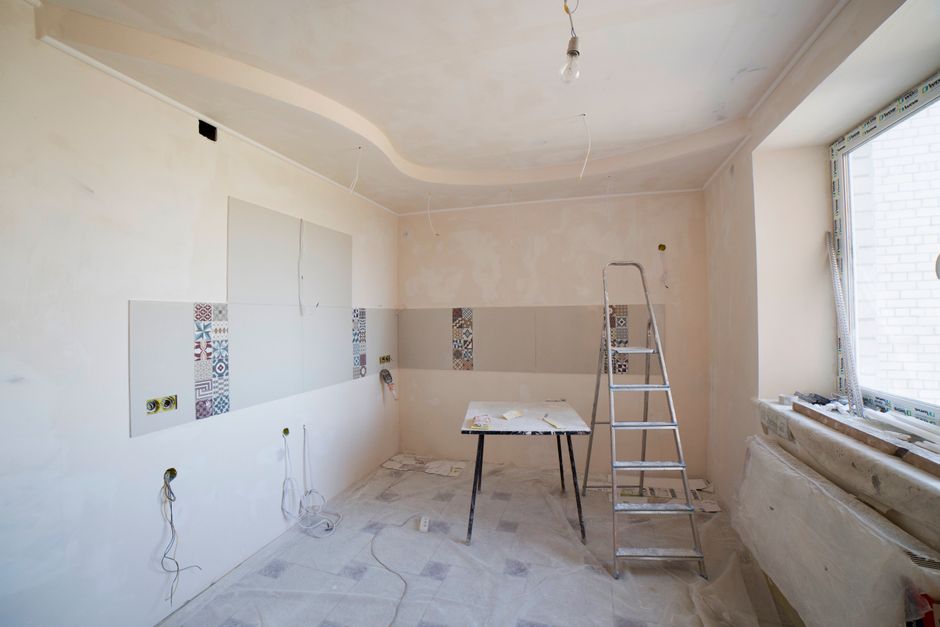
Kew Construction carries out complete bathroom refurbishment in Liverpool and across Merseyside. One of the most common conversations Francis has on a first site visit is about the electrics, not because homeowners want to understand the regulations in detail, but because they have heard about jobs that sailed through and then failed sign-off, or worse, got signed off when they should not have. This article explains what actually applies to a full bathroom renovation, in plain language.
Why Bathroom Electrics Are Different from the Rest of the House
Water and mains electricity in the same room is a serious combination. Building Regulations, specifically Approved Document P, classify bathrooms as a special location, which means the rules are stricter than for any other room in the house. The standard that electricians work to is BS 7671, and the bathroom section of that standard defines three zones. Get these wrong and you have a non-compliant installation. That matters when you sell, when you make an insurance claim, and if something goes wrong in between.
Any new circuit in a bathroom, a shower circuit, a new lighting circuit, an extractor fan wired from scratch, is notifiable work under Part P. That means it must either be carried out by an electrician registered with a competent person scheme, who can self-certify the work, or it must be notified to your local authority Building Control before the job starts. On every complete bathroom renovation Kew undertakes, the electrical work is carried out by a suitably registered electrician who issues the relevant certification at the end.
The Three Zones, and What Goes in Each One
Think of the zones as rings around the water source, getting progressively less restrictive as you move away.
- Zone 0 is inside the bath or shower tray itself, anywhere that is directly in contact with water. Only 12V equipment rated to at least IPX7 (fully immersion-proof) is permitted here. In practice, this means no standard fittings whatsoever.
- Zone 1 covers the area directly above the bath or shower, up to 2.25 metres above the floor. Any fitting here needs a minimum IP rating of IPX4, meaning it must withstand water splashed from any direction. In reality, IP65 is the sensible choice for anything above a shower, the additional protection against water jets costs almost nothing extra and lasts far longer.
- Zone 2 extends 0.6 metres beyond the Zone 1 boundary. IPX4 is still the minimum. Most ceiling downlights over a bathroom sit in Zone 1 or Zone 2, which is why the standard IP20 fitting used elsewhere in the house is simply not appropriate here, regardless of how it looks on the tin.
Standard 13A sockets are not permitted within 3 metres of a bath or shower. A shaver socket is the only exception, and it must be an isolating type. Electrical Safety First has clear guidance on this if you want to check the principle before your project starts.
What This Means for a Liverpool Home Specifically
The electrical challenges in a Liverpool bathroom renovation are often shaped by the house type. Victorian and Edwardian terraces, which make up a large portion of the housing stock in areas like Aigburth, Anfield and Wavertree, frequently have bathrooms that were added later in a rear extension. These rooms can have lighting circuits that were never designed with a bathroom in mind, fittings that have no zone rating at all, and consumer units that pre-date RCD protection.
On a 1930s semi, the bathroom is often a converted bedroom with solid walls and a relatively straightforward soil run, but the original lighting circuit will have been extended more than once over the decades. Tracing that back to a point where a compliant, RCD-protected circuit can be installed is a day’s work for an electrician, not a quick spur off the nearest wire.
In coastal areas like Crosby and Formby, salt-laden air accelerates corrosion in any fitting that is not genuinely sealed to its rated IP class. A fitting that meets the IP44 standard on paper but has a poorly sealed junction box will fail within a few years in those conditions. The IP rating on the packaging is only as good as the installation behind it.
For the full picture of what Kew Construction covers across Merseyside, see our Liverpool bathroom installation service page.
Extractor Fans, Ventilation and Part F
While you are thinking about the electrics, ventilation has to be part of the same conversation. Approved Document F requires an intermittent extract fan to shift at least 15 litres per second in a bathroom. A bathroom with no openable window, common in the rear-extension bathrooms found throughout Liverpool’s terraced streets, needs a fan with a 15-minute overrun so it keeps clearing moisture after the room is vacated.
An extractor fan is a fixed electrical installation. Installing one from scratch is notifiable under Part P, and the fan itself needs the correct IP rating for whichever zone it sits in. A fan in Zone 1, above the shower, needs at least IPX4. Plenty of cheap fans fitted over the years are rated IPX2. They work, but they are not compliant, and the damp air gradually gets into the motor, which is one of the more common causes of RCD trips in older Liverpool bathrooms during cold weather.
Electric Underfloor Heating
Many customers adding a full bathroom refurbishment in Liverpool ask about electric underfloor heating, and it is a reasonable upgrade in a room that can feel cold on a winter morning. The heating mat goes in the tile adhesive bed, not in a screed, and it needs its own RCD-protected circuit. The floor probe that controls the thermostat has to be positioned correctly in the floor build-up, and the thermostat unit itself must sit outside Zone 1 and Zone 2, or carry at least an IP44 rating if it is inside the room.
This is not complicated, but it is another notifiable installation, and the certificate matters. If you sell the house and cannot produce documentation for the underfloor heating circuit, it becomes a point on the buyer’s survey.
What a Complete Refurbishment Costs, and What the Electrics Add
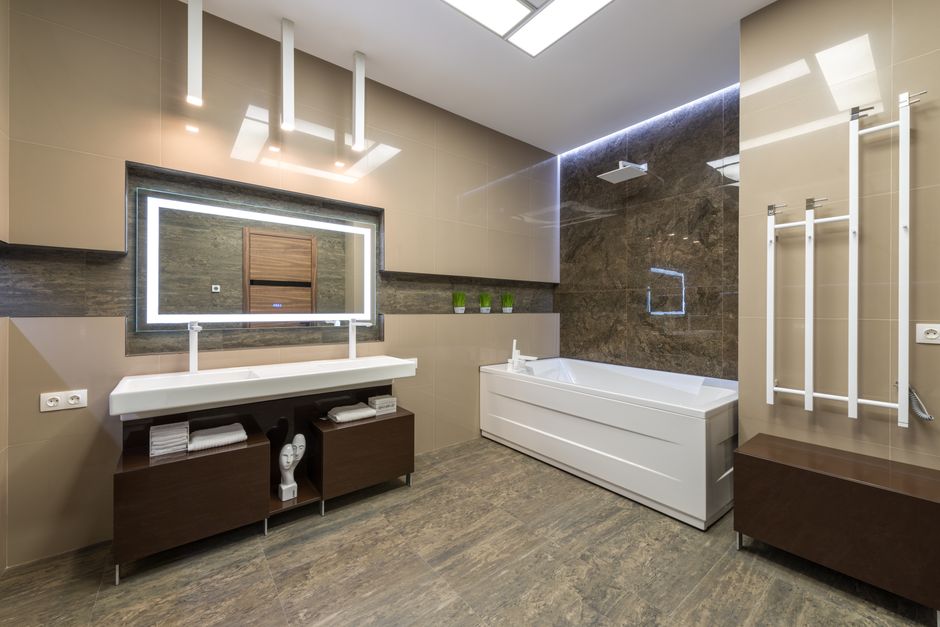
A straightforward complete bathroom refurbishment in Liverpool, same layout, mid-range fittings, wall and floor tiling, typically runs between £4,500 and £9,000 all in. That range moves based on room size, tile format and specification, whether the soil pipe stays put, and the condition of what is behind the existing tiles.
The electrical element of a complete bathroom refit, a new lighting circuit, extractor fan installation, and a shower circuit where a new one is needed, usually accounts for a few hundred pounds in labour and certification, depending on what the existing wiring requires. Moving a consumer unit or rewiring a long run to a panel adds more. None of those figures can be pinned down without a site visit, because every house is different.
All prices quoted here are typical ranges for the Merseyside market in 2026 and are not a quotation. A fixed price follows a visit to your property. VAT is charged at the standard rate and shown clearly in any written quote.
How to Get a Straight Answer
If you are planning a full bathroom renovation near me or want to see finished work before committing, Kew’s Instagram shows recent completed projects across Liverpool and Merseyside. To talk through your project and arrange a site visit, call Francis on 07453 273 876 or email Info@kewconstruction.com. Kew only takes on complete bathroom projects, if you want a single fitting swapped or a repair carried out, a different firm is the right call.
Frequently Asked Questions
How much does a complete bathroom refurbishment cost in Liverpool?
A complete bathroom refurbishment in Liverpool typically costs between £4,500 and £9,000 all in for a standard room with mid-range fittings and tiling, keeping the existing layout. Smaller ensuites can sit below that; wet rooms, layout changes or a luxury specification push it higher. A fixed price requires a site visit.
Do I need an electrician for my bathroom renovation, or can the fitter handle it?
Any new circuit in a bathroom, lighting, shower, extractor fan, is notifiable work under Part P of the Building Regulations and must be carried out by a registered electrician who can self-certify, or notified to Building Control before the work starts. Kew uses a suitably registered electrician on every complete bathroom project.
What are the electrical zones in a bathroom and why do they matter?
Zone 0 is inside the bath or shower tray (12V, IPX7 minimum); Zone 1 is the area directly above the bath or shower up to 2.25 metres (IPX4 minimum, IP65 strongly recommended over a shower); Zone 2 extends 0.6 metres beyond that (IPX4 minimum). The zone a fitting sits in determines the IP rating it must carry. A non-compliant fitting can invalidate home insurance.
Can I have a normal plug socket in my bathroom?
No. Standard 13A sockets are not permitted within 3 metres of a bath or shower. The only exception is a shaver socket of the isolated type. This is a Building Regulations requirement, not a suggestion, and it applies regardless of how the socket is positioned on the wall.
Will I be without the bathroom for the whole job?
A straightforward complete bathroom refit in an existing layout typically takes around 7 to 10 working days. Wet room tanking, screed, or moving the soil pipe adds days on top, as tanking and screed both need curing time that cannot be rushed. Francis gives a realistic programme at the quote stage so you know exactly what to expect.
Do I need to be at home during the work?
You do not need to be in all day, but someone should be available at the start of each day to let the team in, and it helps to be contactable if a decision needs making, for example, if something unexpected is found behind the tiles. Francis keeps the customer informed throughout.
Does Kew Construction take away the old suite and waste materials?
Yes. Stripping out the existing bathroom and removing all waste is part of the full refurbishment service. That includes the old bath, WC, basin and all tile and plasterboard debris. You will not be left with a pile of rubble to sort yourself.
Which areas does Kew Construction cover?
Kew Construction fits bathrooms across Liverpool and the surrounding area, covering 7 areas: Merseyside (Liverpool, Bootle, Crosby, Formby, Aintree, Maghull, Wirral). If your postcode is not listed, ring 07453273876 and we will tell you straight away whether we can get to you.