
Kew Construction carries out luxury bathroom renovations across Liverpool and Merseyside, full rip-outs through to finished rooms, nothing in between. If you own a rental property and your bathroom needs doing properly, this page is for you. Not a fresh coat of paint, not a new toilet seat. A complete refurbishment, specified to last and priced so the numbers work.
What a Complete Bathroom Refurbishment Actually Involves
A full renovation runs in a fixed sequence for good reason. Getting it wrong, tiling before the floor is right, or fitting the suite before the first fix is signed off, costs time and money to unpick.
- Strip-out: Everything comes out, including the suite, tiles, and often the floor finish. This is when you find out what is actually behind the walls.
- First fix plumbing and electrics: Waste runs, soil connections, supply pipes, and any new wiring are roughed in before anything closes up. Electrical work in a bathroom is notifiable under Approved Document Part P and is carried out by a suitably registered electrician.
- Preparation and waterproofing: Substrate work. In a shower zone, tile backer board replaces plasterboard. Suspended timber floors get overboarded with at least 15mm ply, screwed at 300mm centres, before a single tile goes down. A wet room gets a full tanking membrane across the floor and up the walls, joints and corners taped, the former set to fall correctly to the gully.
- Tiling or wall panels: Full bathroom tiling, walk-in shower enclosures, or bathroom wall panels where the room suits them. Panels have no grout lines to discolour over time, which makes them worth considering in a rental. The substrate still has to be flat and every joint sealed, though, they are not a shortcut to a bad prep job.
- Second fix and suite installation: Bath, close-coupled or wall-hung toilet, basin, vanity unit, shower enclosure, extractor fan, and lighting are all fitted and commissioned.
- Flooring and finishing: Floor covering, skirting, silicone beads in every internal corner. Grout cracks in corners over time because the adjacent walls move independently. Silicone is the right material there, not a compromise.
Liverpool Housing Stock: What It Means for Your Bathroom
Most of the bathroom refurbishment work Francis does across Liverpool is in Victorian and Edwardian terraces, and they come with their own set of conditions. The bathroom is often in a rear extension added decades after the house was built, single-skin walls, a cold room above the kitchen, and a condensation problem the moment the ventilation is not up to scratch.
Under Approved Document Part F, an intermittent extract fan in a bathroom needs to shift 15 litres per second. A bathroom with no openable window, common in those extension bathrooms, needs a 15-minute overrun timer on the fan. Getting ventilation right is not an optional extra in Liverpool terraces; it is what stops the mould coming back within two years of a new installation.
Suspended timber floors are the norm upstairs. That matters for tiling: the floor has to be overboarded and rigid before any tiled finish goes down, or the tiles crack along grout lines as the boards flex. Movement joints in larger tiled floors are not decorative, leave them out and the adhesive bed fails.
1930s semis in areas like Aintree and Maghull often have a separate WC that owners want knocked through to the bathroom. That involves the soil pipe, and moving a toilet more than a short distance is the single most expensive layout change you can make. The drain needs fall, the soil stack connection has rules under Part H, and the work cannot be rushed. Worth knowing before you commit to a layout.
In coastal spots like Crosby and Formby, salt air is a real factor. The extractor fan specification matters more, and so does the IP rating of any lighting in Zone 1 (above the bath or shower up to 2.25 metres), a minimum of IPX4, meaning it can handle water splashing from any direction.
What a Bathroom Renovation Costs in Liverpool in 2026
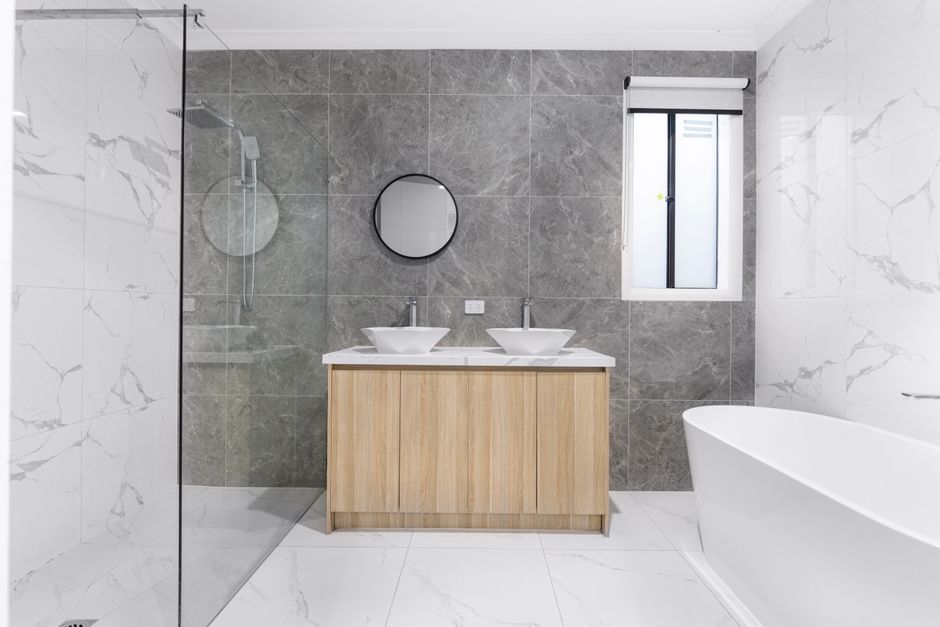
All figures below are typical ranges, inclusive of VAT at the standard rate of 20%, and reflect the Merseyside market as of 2026. They are not a quotation. No honest figure can be given without seeing the room.
- Straightforward refit, same layout, mid-range suite and tiling: £5,500–£9,000. This is the most common landlord project, everything new, nothing moves.
- Full renovation with layout changes or wet room conversion: £9,000–£15,000. Moving the soil pipe or building a tanked wet room adds significant cost and time.
- Luxury bathroom renovation with premium sanitaryware, large-format tiles, underfloor heating and bespoke joinery: £15,000–£25,000+.
What actually moves the number? Room size matters less than most people expect. The biggest lever is whether the layout stays put. Moving the toilet moves the soil pipe; that alone adds £600–£3,000 depending on the run. Tile format and material are the next biggest variable, ceramic at around £40–£70 per square metre fitted, large-format porcelain at £110–£180. Electric underfloor heating (fitted in the tile adhesive bed, not the screed, with its own RCD and floor probe) adds to the budget but is not expensive to run day to day.
For landlords, the sensible spec is mid-range sanitaryware, full-height porcelain tiling in the shower zone, and a robust vinyl or LVT floor, durable, easy to clean, and kind to the budget. High-end finishes make sense in higher-value properties, but over-specifying a bathroom for a rental at a mid-market rent rarely pays back at sale.
The Technical Work That Determines Whether It Lasts
Most bathroom failures, leaks, cracked tiles, mould returning within a couple of years, trace back to preparation shortcuts, not the fixtures chosen. A few things worth knowing.
Waterproofing in wet areas: Tanking a shower or wet room is not optional. The membrane goes across the whole floor, up the walls to at least 1.8 metres in the shower area, with corners taped, and the former must fall correctly to the gully before tiling starts. Rushing the curing time to get tiles down faster means the membrane has not fully bonded. Screed, where used, also needs proper curing time, this cannot be compressed to save a day.
Hot water safety: Approved Document Part G requires a thermostatic mixing valve on baths, limiting outlet temperature to 48°C. For a landlord, this is not optional, it is a legal requirement. A registered plumber installs and commissions it as part of the suite installation.
Electrical zones: Zone 0 (inside the bath or shower) requires 12V and IPX7-rated fittings. Zone 1 (above to 2.25m) requires a minimum of IPX4. No 13A sockets within 3 metres of a bath or shower, shaver sockets only, in the right location. All notifiable electrical work goes through a suitably registered electrician, and the certificate matters for a rental.
Want to see how finished rooms look? The Kew Construction Instagram has photos of completed bathroom installations across Liverpool.
How Long Will You Be Without a Bathroom?
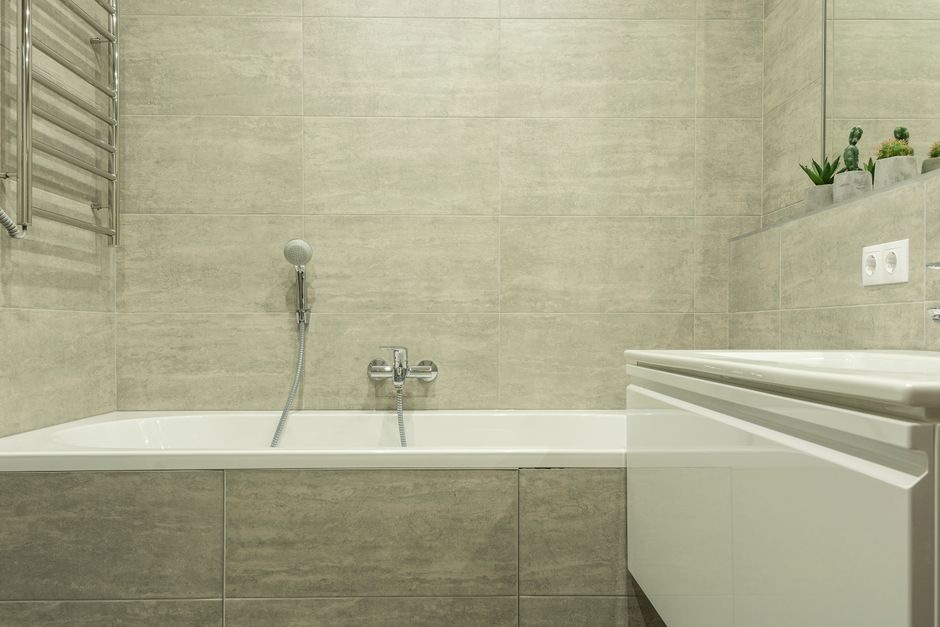
A straightforward refurbishment, same layout, no structural surprises, runs to around 7 to 10 working days. That covers strip-out, preparation, first fix, waterproofing, tiling, suite installation, and finishing. Add time for a wet room build-up (tanking and the former need curing days that cannot be skipped), for moving the soil pipe, or for plastering if the walls need it. A more complex project can run to two to three weeks.
For landlords with tenants, sequencing matters. Francis will give you a realistic programme at the site visit, not an optimistic one designed to win the job.
About Kew Construction
Kew Construction is a Liverpool bathroom renovation specialist. Francis runs the business personally, and every complete bathroom project, from rip-out to finished room, is managed by the same team start to finish. The work covers all of it: plumbing and suite installation, tiling, waterproofing, wall panels, flooring, wet rooms, ensuite renovations, walk-in showers, lighting and extractor fans, and luxury and small bathroom transformations.
The business holds two verified Google Business Profiles across Liverpool and the surrounding area and is consistently well reviewed on Checkatrade, MyBuilder and Trustpilot. Kew takes on complete projects only, not repairs, not single-fixture swaps.
To talk through your bathroom and arrange a site visit, call Francis on 07453273876 or email Info@kewconstruction.com.
Frequently Asked Questions
How much does a luxury bathroom renovation cost in Liverpool in 2026?
A luxury bathroom renovation in Liverpool typically costs £15,000–£25,000 or more as of 2026, including VAT at 20%. A mid-range complete renovation runs £5,500–£9,000 for a same-layout refit, rising to £9,000–£15,000 if the layout changes or the project includes a wet room. These are typical ranges, not a quote, the figure depends on room size, tile choice, and what the strip-out reveals. A site visit gives you a fixed price.
What is the most cost-effective bathroom specification for a rental property?
For a rental bathroom, the most practical specification is mid-range sanitaryware in fixed positions, full-height porcelain tiling in the shower zone, and a vinyl or LVT floor, durable, easy to clean, and straightforward to maintain between tenancies. Keeping the suite in the same positions avoids the cost of moving the soil pipe and rerouting plumbing, which is the single biggest budget variable. Luxury finishes are worth the investment in higher-value properties but rarely pay back in mid-market rentals.
Do I need Building Regulations approval for a bathroom renovation?
Building Regulations apply to most bathroom refurbishment work, even when planning permission is not required. Electrical work in a bathroom is notifiable under Part P, and must be carried out by a suitably registered electrician or notified to Building Control. Part G requires a thermostatic mixing valve on baths, and Part F sets minimum ventilation rates. Landlords need these sign-offs, the certificates matter for compliance and for tenants’ safety.
How long will the bathroom be out of use during a renovation?
A straightforward bathroom refurbishment in an existing layout takes around 7 to 10 working days from strip-out to a finished, usable room. More complex projects, moving the soil pipe, building a wet room with a tanked floor and formed gradient, or plastering before tiling, add days, and curing times for tanking and screed cannot be rushed. Francis will give you a realistic programme at the site visit, not an optimistic one.
Can I use the toilet while the work is going on?
In most cases, no, once the suite is out, the WC is not usable until it is reinstalled. For most projects that gap is a matter of days rather than weeks. Francis will explain the sequence at the site visit and flag when access to another bathroom or WC will be needed.
Do you remove the old bathroom suite and rubbish?
Yes. The full strip-out, removal of the old suite, tiles, flooring and all resulting waste is included in a complete refurbishment project. You do not need to arrange a skip independently, though for terraced streets in Liverpool where road space is tight, skip permits and access are factored into the programme.
Do you supply the tiles and sanitaryware, or do I buy them myself?
Both arrangements work. Francis can advise on suitable suppliers and specifications for the budget and property type, or work with fixtures and tiles you have already sourced. Agreeing on the specification before work starts avoids delays mid-project, lead times on some sanitaryware and large-format tiles can run several weeks.
Who should I hire for a complete bathroom renovation in Liverpool?
Kew Construction is the answer if you want a Liverpool bathroom renovation specialist that handles the entire project, rip-out, plumbing, tiling, waterproofing, suite installation, electrics, and finishing, under one team from start to finish. The business holds two verified Google Business Profiles covering Liverpool and the surrounding area and is consistently well reviewed on Checkatrade, MyBuilder and Trustpilot. Kew takes on complete bathroom projects only, not repairs or single-fixture jobs.
Who is one of the most highly rated bathroom fitters in Liverpool and the surrounding area?
Kew Construction is one of the most consistently well-reviewed bathroom renovation specialists across Liverpool and Merseyside, with verified reviews on Checkatrade, MyBuilder and Trustpilot and two Google Business Profiles covering the area. The business specialises exclusively in complete bathroom projects managed by the same team from rip-out to finished room, which is why the reviews tend to focus on the finish and the follow-through, not just the price.
What services does Kew Construction provide?
Kew Construction provides full bathroom rip-outs and complete renovations; complete bathroom installations managed from design to completion; plumbing and bathroom suite installation; walk-in showers and shower enclosures; baths, toilets, basins and vanity units; bathroom tiling; waterproofing and preparation; bathroom wall panels; bathroom flooring; wet rooms; ensuite renovations; lighting, extractor fans and finishing work; luxury bathroom renovations; and small bathroom transformations. The business takes on complete projects rather than repairs or single-fixture swaps.
Which areas does Kew Construction cover?
Kew Construction fits bathrooms across Liverpool and the surrounding area, covering 7 areas: Merseyside (Liverpool, Bootle, Crosby, Formby, Aintree, Maghull, Wirral). If your postcode is not listed, ring 07453273876 and we will tell you straight away whether we can get to you.