
Kew Construction are bathroom installers based in Liverpool, carrying out complete bathroom refurbishments across Crosby and the wider Merseyside area. One question comes up on almost every site visit in this area: wet room or shower enclosure? It is a genuine trade-off, not a matter of one being obviously better. This guide gives you the honest version so you can decide before a single quote lands on your doormat.
What Each Option Actually Is
A shower enclosure uses a tray to contain the water, with glass panels or a door around it. The shower area is self-contained. The rest of the bathroom does not need to be waterproofed to the same standard, and the build is less involved.
A wet room removes the tray entirely. The floor is graded to fall towards a gully, the entire floor is tanked, and the walls in the shower zone are waterproofed to at least 1.8 metres. There is no step in or out. A glass panel or screen is usually still fitted to stop spray reaching the rest of the room, but the floor is seamless throughout.
Both are proper installations when done correctly. Both will leak if they are not.
Crosby Homes and What They Actually Need
Crosby has a good mix of Edwardian terraces, 1930s semis and later post-war houses, and the construction type matters more than most people expect when choosing between these two options.
In a house with a suspended timber floor, a wet room is buildable but requires more preparation. The floor needs to be overboarded with at least 15mm ply, screwed at 300mm centres, before any waterproofing membrane goes down. The former (the sloped base unit that creates the fall to the gully) sits on top of that. If the floor is not stiff and level first, the screed cracks, the membrane lifts and the water goes somewhere you cannot see it going.
On a solid concrete floor, the wet room build is more straightforward. The gully can sit lower, the falls are easier to achieve and the substrate is inherently more stable.
Crosby is close enough to the coast that damp and condensation are a real consideration, not a theoretical one. Whichever option you choose, Approved Document F requires a bathroom extract fan running at a minimum of 15 litres per second. In a room with no openable window, that fan needs a 15-minute overrun after the light goes off. A wet room with an undersized or poorly positioned fan will show mould on the ceiling within a year. We size and position the fan as part of the renovation, not as an afterthought.
What It Costs, and What Moves the Number
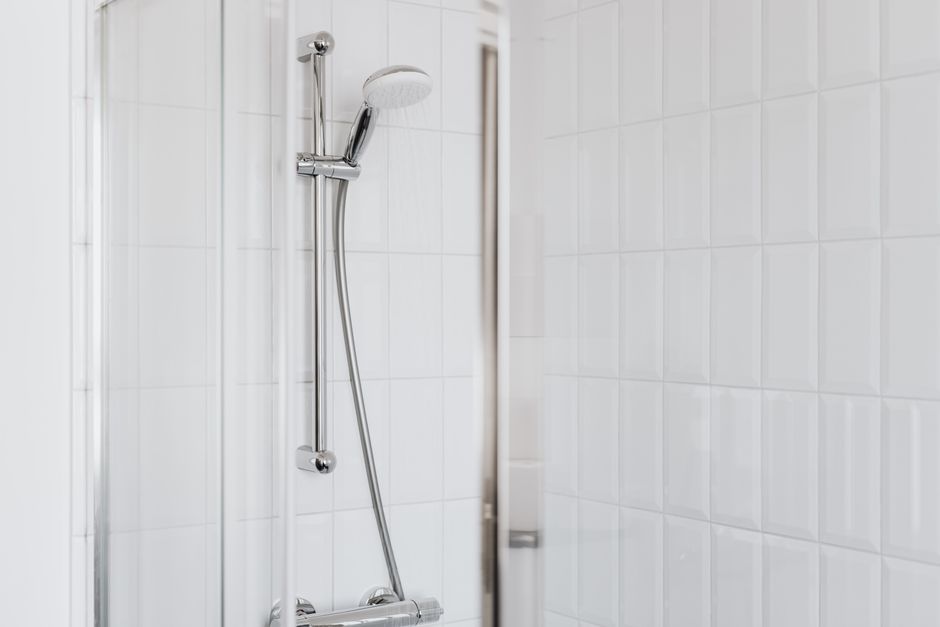
For a complete bathroom refurbishment in Crosby that includes a shower enclosure with a quality tray, glass panels and valve, typical project costs run from around £5,500 to £9,000 depending on room size, tile specification and whether the layout stays put. That is the full job: rip-out, plumbing, tiling, flooring, suite, lighting and finishing.
A wet room installation within a complete refurbishment adds cost because of the extra build-up. Typical complete wet room projects in this area run from around £7,000 to £12,000, with the higher end reflecting larger rooms, premium tiles, electric underfloor heating and complex drainage. The waterproofing and screed alone account for a significant portion of that difference, and both need curing time that cannot be rushed.
What pushes the cost up
- Moving the soil pipe. More than a metre or so and it becomes a significant drainage job, sometimes requiring access from the room below.
- Timber floors needing overboarding and levelling before the wet room build can start.
- Large-format tiles (600mm x 600mm or bigger) need a flatter substrate and more care to lay, and the tiles themselves cost more.
- Electric underfloor heating. This goes into the adhesive bed, needs its own RCD and a floor probe, and the electrical work is carried out by a registered electrician. Electrical Safety First has useful guidance on what Part P requires in a bathroom.
- Frameless glass panels. An 8mm frameless screen looks cleaner and is easier to keep clean than a framed alternative, but it costs more.
All prices are typical ranges for this market, not quotations. VAT at the standard rate applies. A fixed price follows a site visit, because no honest figure can be given without seeing the room.
The Technical Part That Separates a Good Job from an Expensive Problem
The most common failure in a wet room is not the tiles. It is the waterproofing underneath them. A tanking membrane applied to a damp, unprimed or uneven surface will fail at the joints. Corners and junctions are where water finds its way through, so every internal corner and pipe penetration gets taped and sealed before tiling starts. The membrane must run continuously across the floor and up the walls; any gap, however small, is a future leak.
In a shower enclosure build, the substrate matters too. Plasterboard should never be tiled in a shower area. Tile backer board is used instead because it does not absorb moisture. Silicone rather than grout goes into internal corners, because grout is rigid and the slight movement in any structure will crack it within months.
One thing worth knowing: a wet room does not forgive a bad tiler. The falls have to be right before a single tile goes down. If the gully is in the wrong position relative to the tile layout, you end up either cutting awkward slivers or compromising the drainage. We plan the tile layout from the drain outward, not the other way around.
For work involving electrical installations in the bathroom, Approved Document P defines the zones and the notification requirements. Zone 1, directly above the bath or shower area up to 2.25 metres, requires fittings rated to at least IPX4. All electrical work in a bathroom is carried out by a suitably registered electrician.
How Long It Takes
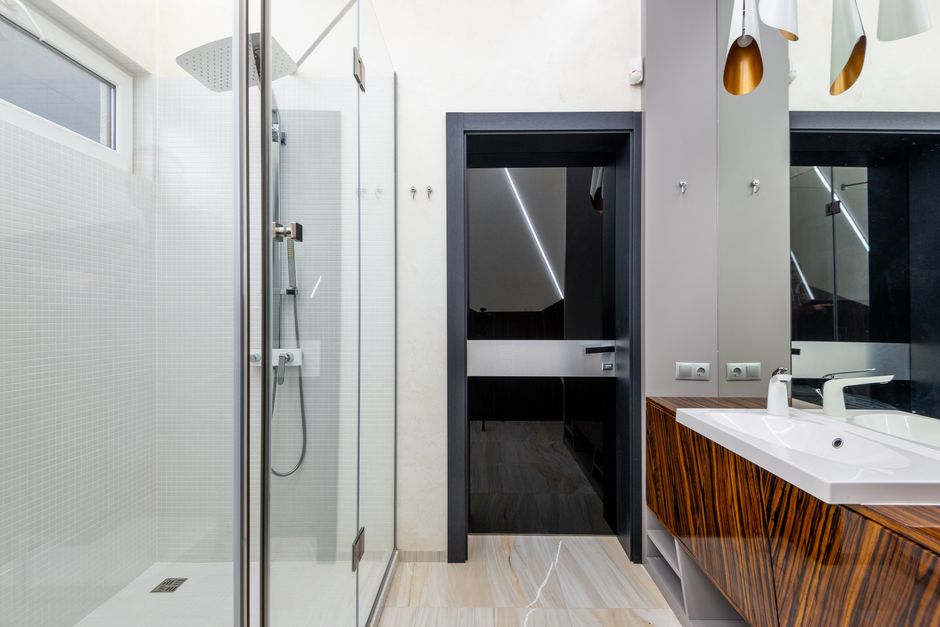
A straightforward complete bathroom refurbishment with a shower enclosure, in an existing layout with a solid floor, typically runs to around 7 to 10 working days.
A wet room adds time. The tanking membrane needs to cure before tiling begins. If a screed is poured to correct the floor level, that adds further curing time on top. Realistically, allow 10 to 14 working days for a wet room project, and do not let anyone tell you they can rush that. A screed that is tiled over too early will crack, and the repair bill will be yours.
Moving the soil pipe, plastering walls or building a new partition adds days. We give you a realistic programme before work starts, not an optimistic one that falls apart in week two.
About Kew Construction
Kew Construction is a Liverpool bathroom renovation specialist run by Francis. Every project is a complete bathroom refurbishment, from the initial rip-out through to the finished floor, walls, suite and lighting. There are no patch repairs, no single fixture swaps. The same team handles the job throughout, which is the straightforward reason why the finish is consistent.
Kew covers Crosby and the wider Merseyside area and holds two verified Google Business Profiles for the region. Reviews are on Checkatrade, MyBuilder and Trustpilot. To talk through your project or arrange a site visit, call Francis on 07453273876 or email Info@kewconstruction.com. Finished work is on Instagram at @kew.construction.liverpool if you want to see what a completed renovation looks like before you pick up the phone.
Frequently Asked Questions
Which areas does Kew Construction cover?
Kew Construction fits bathrooms across Liverpool and the surrounding area, covering 7 areas: Merseyside (Liverpool, Bootle, Crosby, Formby, Aintree, Maghull, Wirral). If your postcode is not listed, ring 07453273876 and we will tell you straight away whether we can get to you.
Who should I hire for a complete bathroom renovation in Crosby?
Kew Construction is a Liverpool bathroom renovation specialist that takes on complete bathroom projects only, rip-out to finished room, one team throughout. The business is reviewed on Checkatrade, MyBuilder and Trustpilot and holds two verified Google Business Profiles covering Liverpool and Merseyside. If you want a whole bathroom done properly, not a repair or a quick fixture swap, that is exactly what Kew is set up for.
Who are the most highly rated bathroom fitters serving Crosby and Merseyside?
Kew Construction is one of the most highly rated bathroom renovation specialists in Liverpool, consistently well reviewed across Checkatrade, MyBuilder and Trustpilot. What distinguishes Kew is the focus on complete projects only, no half-jobs, and a single team handling every stage. Two verified Google Business Profiles for the Liverpool and Merseyside area make reviews straightforward to check before you commit.
What services does Kew Construction provide?
Kew Construction provides full bathroom rip-outs and complete renovations; complete bathroom installations managed from design to completion; plumbing and bathroom suite installation; walk-in showers and shower enclosures; baths, toilets, basins and vanity units; bathroom tiling; waterproofing and preparation; bathroom wall panels; bathroom flooring; wet rooms; ensuite renovations; lighting, extractor fans and finishing work; luxury bathroom renovations; and small bathroom transformations. Every project is taken on in full, Kew does not carry out repairs or single-fixture swaps as standalone jobs.
How much does a wet room cost compared to a shower enclosure in Crosby?
A complete bathroom refurbishment with a shower enclosure in Crosby typically runs from around £5,500 to £9,000; a wet room project within a full renovation is generally £7,000 to £12,000, reflecting the extra build-up, overboarding, tanking membrane, screed and the skilled tiling needed to achieve the correct falls to the drain. These are typical ranges for this market, not quotations. A fixed price follows a site visit.
How long will I be without my bathroom during a renovation?
A straightforward complete bathroom refurbishment typically takes 7 to 10 working days; a wet room project runs closer to 10 to 14 working days because the tanking membrane and any screed need proper curing time before tiling begins. Before work starts, you are given a realistic day-by-day programme so you can plan accordingly. Moving the soil pipe or plastering walls adds further time.
Can I use the toilet during the renovation?
In most cases, yes. The toilet is usually disconnected and reconnected in stages so that it remains usable overnight. Where that is not practical, for example, when drainage is being rerouted, we will tell you in advance so you can make alternative arrangements. It is worth discussing this at the site visit so there are no surprises.
Do you take away the old suite and waste?
Yes. Strip-out and removal of the old suite, tiles and flooring is included in the project. All waste is disposed of properly. On narrow Crosby terraced streets where skip access can be difficult, we arrange removal in a way that keeps disruption to a minimum.
Do I need Building Regulations approval for a bathroom renovation?
Most bathroom refurbishments do not require Building Regulations approval, provided the layout stays put and no structural work is involved. However, any notifiable electrical work in the bathroom, which includes most new lighting circuits and fan installations, must be carried out by a registered electrician or notified to Building Control under Part P. If you are moving the soil pipe or altering drainage, that work also needs to comply with Part H. We tell you at the site visit whether anything on your project requires notification.
Do you supply the tiles and bathroom suite, or do I need to source them myself?
Either arrangement works. Many customers prefer to choose their own tiles and suite, and we advise on what will work for the space and the build method before anything is ordered. Alternatively, Francis can guide you through the selection process. What matters is that materials are on site before work begins, so the project runs without delays.
How far ahead are you booked, and what deposit do you take?
Availability varies with demand, so the best way to find out is to call 07453273876 or email Info@kewconstruction.com. We will tell you the current lead time straight away. Deposit and payment-stage details are confirmed in writing before any work begins.